
Have you ever walked through a neighborhood in December and wondered how different families view the holiday season? It’s a time of bright lights, snowy windows, and a lot of questions. One of the most common things people ask is: do muslims celebrate christmas? At first glance, the answer might seem simple, but it actually has a lot of interesting layers.
For many Muslims, the end of the year is a time for reflection and community, even if they don’t follow the religious traditions of Christmas. Because Islam and Christianity share a deep history, the figure of Jesus is very important to both faiths. However, the way his birth is recognized looks quite different depending on who you talk to and where they live. Let’s dive into the details of how this works in the real world.
Understanding the Islamic Perspective on Jesus
To understand the answer to “do muslims celebrate christmas?“, we first have to look at how Muslims view Jesus, known as Isa in Arabic. In Islam, Jesus is a highly respected Prophet and a Messenger of God. The Quran describes him as a “Word” from God and mentions his mother, Mary (Maryam), more times than the New Testament does!
While Muslims believe in the virgin birth and the miracles of Jesus, they do not view him as the Son of God. Because the religious core of Christmas centers on the idea of God becoming human, most Muslims do not celebrate it as a religious holiday. To them, celebrating a religious event that contradicts their core belief in the oneness of God (Tawhid) wouldn’t feel right. Instead, they honor Jesus throughout the year by following his teachings of peace and kindness.
The Biography of Prophet Isa (Jesus) in Islam
Understanding the figure behind the holiday helps clarify why the celebration differs. Here is a breakdown of his life according to Islamic tradition.
| Feature | Details in Islamic Tradition |
| Name | Isa ibn Maryam (Jesus, son of Mary) |
| Title | Al-Masih (The Messiah), Ruhullah (Spirit of God) |
| Mother | Maryam (Mary), revered as the purest woman |
| Birth | Miraculous virgin birth under a palm tree |
| Miracles | Speaking from the cradle, healing the blind, bringing clay birds to life |
| Role | One of the five “Arch-Prophets” (Ulul ‘Azm) |
| Future | Believed to return before the Day of Judgment to bring peace |
How Do Muslims Celebrate Christmas Around the World?
If you travel to different countries, you will see a huge variety in how do muslims celebrate christmas. In places like Senegal or Lebanon, which have large Christian populations, Christmas is often treated as a national holiday. You might see Muslims and Christians sharing meals or visiting each other’s homes as a sign of neighborly love.
In these multicultural spots, the focus is often on the “spirit of the season” rather than the religious liturgy. It’s common to see public decorations and festive markets where everyone joins in the winter fun. This doesn’t mean they are changing their religion; rather, they are participating in a shared cultural moment that promotes peace and togetherness in their community.
Do Muslims Celebrate Christmas in the US?
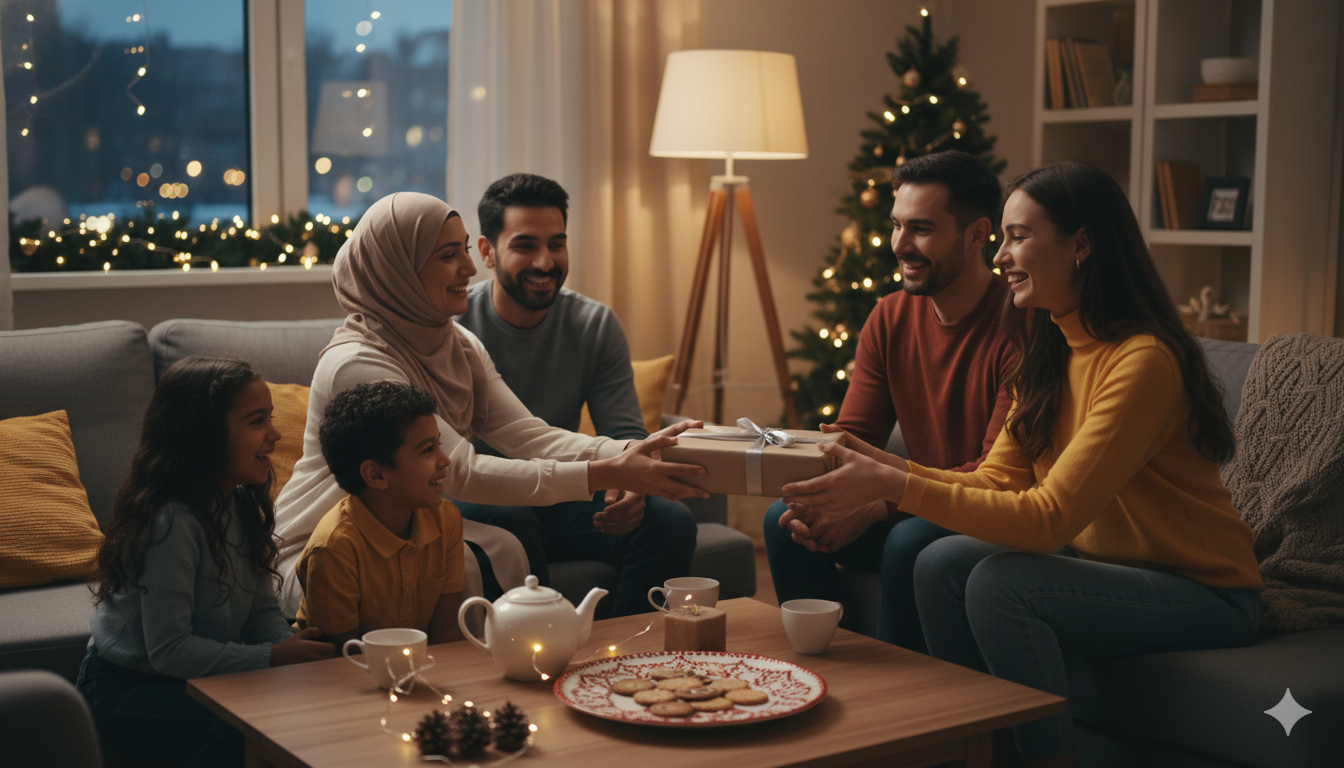
Living in the West adds another layer to this topic. If you are curious about do muslims celebrate christmas in the us, you will find that many American Muslims navigate a “middle ground.” Since Christmas is such a massive cultural event in America—affecting everything from school breaks to office parties—it’s hard to ignore.
Some American Muslim families choose to have a “winter dinner” or exchange gifts just to involve their children in the joy of the season without the religious aspects. Others might use the long weekend to volunteer at soup kitchens or host family gatherings. For them, it’s about being part of the community and showing kindness to their neighbors during a time that is special to so many others.
When Do Muslims Celebrate Christmas?
Technically, the question of when do muslims celebrate christmas has a bit of a twist. Since it is not an official Islamic holiday, there is no specific date on the Islamic lunar calendar for it. However, if a Muslim family chooses to participate in the festivities, they usually do so on December 25th, following the Gregorian calendar used in the West.
Interestingly, some Coptic Christians in Egypt and other parts of the Middle East celebrate on January 7th. In these regions, Muslim neighbors might send well-wishes on that date instead. It’s all about local traditions and the specific community someone belongs to. Regardless of the date, the focus for a Muslim is usually on respect and social harmony.
The Difference Between Religious and Cultural Celebration
It is very important to distinguish between a “religious” celebration and a “cultural” one. For a Muslim, a religious celebration involves specific prayers and acts of worship, like the ones performed during Eid. Since Christmas rituals like the Nativity or Mass are specific to Christianity, Muslims generally stay away from those parts.
However, “cultural” things like looking at lights, eating seasonal treats, or enjoying a day off work are seen differently by many. Some scholars say it’s perfectly fine to be part of the social joy, while others prefer to keep a clear boundary. This diversity of thought is a big part of the modern Muslim experience, especially for those living in diverse cities.
What are the Main Islamic Holidays?
While we are talking about holidays, it is helpful to know what the two main celebrations in Islam actually are. These are the times when you will see the most excitement in a Muslim household!
- Eid al-Fitr: This is the “Festival of Breaking the Fast.” it happens right after the month of Ramadan. Families dress up, give to charity, and eat lots of delicious food.
- Eid al-Adha: This is the “Festival of Sacrifice.” It honors the story of Prophet Abraham and is a time for sharing meat with the poor and spending time with extended family.
Compared to these, Christmas is viewed more as a “neighbor’s holiday” rather than their own.
Gift Giving and Social Invitations
One of the most common situations a Muslim might face is being invited to a Christmas party. Most people wonder if it’s okay to go. In many cases, Muslims will attend social gatherings with coworkers or friends to be polite and maintain good relationships.
When it comes to gifts, many choose to give presents that aren’t specifically “Christmas-themed” but are meant to show appreciation for a friend. It’s a way of saying, “I value our friendship,” without necessarily adopting the religious doctrine of the holiday. This kind of social grace is a big part of how Muslims practice their faith in a modern, globalized world.
Why Some Families Choose Not to Participate
On the other hand, many families decide that they won’t participate at all. They might feel that because the holiday has roots in both Christian and pagan traditions, it doesn’t align with their spiritual path. This isn’t meant to be rude! It’s just a personal choice to stay focused on their own religious identity.
For these families, December 25th might just be a regular day off to relax, watch movies, or catch up on chores. They teach their children to be respectful of others’ celebrations while explaining that every faith has its own special days. This helps children feel confident in their own identity while still being kind to their friends who are celebrating.
Bridging the Gap with Kindness
At the heart of the question “do muslims celebrate christmas” is the idea of how we all live together. Islam teaches that being a good neighbor is a religious duty. Even if a Muslim doesn’t put up a tree or sing carols, they are often the first to help a neighbor with their groceries or offer a warm smile during the cold winter months.
Respect goes both ways. Just as Muslims appreciate it when their friends wish them a “Happy Eid,” many Muslims find it meaningful to offer a “Happy Holidays” or a kind word to those celebrating Christmas. It builds a bridge of understanding that is much more important than the specific rituals of any one day.
Conclusion
In the end, the answer to do muslims celebrate christmas varies from person to person. While it isn’t a religious holiday for them, the values of the season—like peace, charity, and family—are values that Muslims hold dear every single day. Whether they are enjoying a quiet day at home in the US or sharing a meal with Christian friends in a busy Middle Eastern city, the goal is always mutual respect.
If you have Muslim friends, the best thing you can do is ask them about their traditions! Most people love sharing their culture and explaining what makes their faith special to them.
(FAQs)
- Is it haram (forbidden) for Muslims to say “Merry Christmas”?
This is a topic that scholars debate. Some believe it is a simple act of politeness and “neighborly kindness,” while others feel it might imply agreement with another religion’s theology. Many Muslims choose to say “Happy Holidays” or “Season’s Greetings” as a respectful middle ground.
- Do Muslim children get gifts in December?
Some families do give “winter gifts” so their kids don’t feel left out at school, but many prefer to save the big gift-giving moments for the two Eids. It really depends on the family’s individual traditions and where they live.
- Can a Muslim have a Christmas tree?
Most practicing Muslims avoid having a tree because it is a symbol strongly associated with a different religious holiday. However, some see it as a secular decoration for the winter season. Generally, it’s not a common sight in Muslim homes.
- How do Muslims view the birth of Jesus?
Muslims view the birth of Jesus as a miraculous sign from God. While they don’t celebrate it on December 25th, the story of his birth is told with great beauty and reverence in the Quran, specifically in Surah Maryam.
- Do Muslims go to church on Christmas?
Most do not, as the church service is a religious act of worship for another faith. However, a Muslim might enter a church for a wedding, a funeral, or a community event out of respect for a friend.
- What should I say to my Muslim friend during December?
“Happy Holidays” is always a safe and kind choice! If you want to be even more thoughtful, you can ask them if they have any special family traditions they enjoy during the winter break.
References:
- The Quran, Surah Maryam (Chapter 19) – For the Islamic account of Jesus’ birth.
- SoundVision: “Christmas in the Muslim World” – For cultural perspectives.
- Britannica: “Islamic Views on Jesus and Christianity.”
- Pew Research Center: “Muslims in America and Religious Identity.”


Leave a Reply