
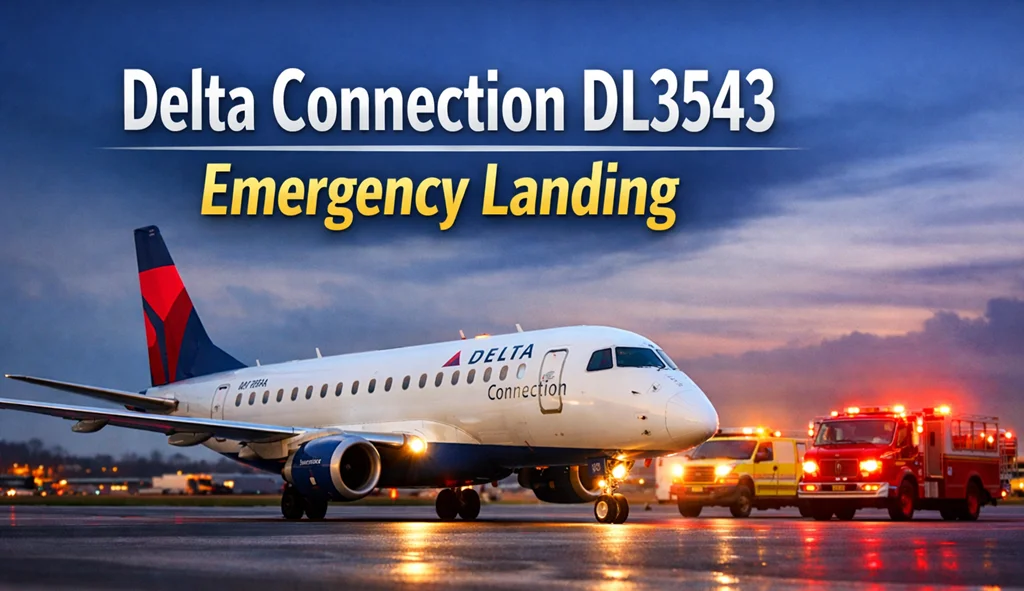
In this article, we will explain what happened on flight DL3543, what emergency landings mean in aviation terms, how crews and pilots respond to unfolding situations, and why this incident should instill confidence rather than fear in air travel.
A Closer Look at Delta Connection Flight DL3543
Delta Connection flights operate under Delta Air Lines but are flown by smaller regional partners using jet aircraft like the Embraer 170 and similar models. These regional flights form vital links between major cities and smaller hubs. On July 7, 2025, Delta Connection flight DL3543 was scheduled to fly from Minneapolis to Chicago Midway International Airport. Shortly after takeoff, the crew detected an issue that required immediate evaluation and chose to return to the departure airport.
According to flight tracking and aviation reporting channels, DL3543 climbed to about 21,000 feet before leveling off. At that point, the crew decided it was safest to stop climbing and return to Minneapolis because of what appeared to be a pressurization related alert. Pressurization systems regulate cabin air pressure as the aircraft ascends. When sensors detect a potential malfunction, pilots must assess the situation quickly and carefully. In this case, the decision was made to declare an emergency and return to the departure airport for inspection and precautionary procedures.
The aircraft executed a controlled return flight and landed safely on runway 12R at Minneapolis. Passengers disembarked without injury while ground crews and maintenance teams began the necessary inspections.
What Does an Emergency Landing Really Mean?
The term emergency landing can sound alarming to passengers who are not familiar with aviation terminology. In public discussions, people sometimes interpret the phrase as indicating immediate danger or loss of control. In reality, emergency landings occur for a variety of reasons, and many of them are precautionary rather than responses to catastrophic failure.
In aviation, an emergency landing refers to a situation where pilots determine that continuing the flight poses unnecessary risk. This decision can be based on:
-
System warnings or sensor alerts,
-
Changes in cabin pressure,
-
Abnormal sounds or oil temperature fluctuations,
-
Weather concerns,
-
Medical emergencies involving passengers or crew.
Most emergency landings involve carefully controlled descents and landings back at the departure airport or at the nearest suitable airport. The goal in such cases is to remove uncertainty by returning to the ground where the aircraft can be safely inspected and specialists can address the issue. This approach demonstrates the aviation industry’s conservative and safety‑first philosophy.
Pilot Training and Decision Making
One lesson from the DL3543 emergency landing is the importance of pilot decision making. Commercial pilots undergo extensive training to evaluate real‑time information and follow checklists designed to manage abnormal situations. For example, they train on simulators that introduce pressure alerts, mechanical warnings, and other potential triggers that call for thoughtful responses.
In flight DL3543, the crew would have assessed the pressurization issue by reviewing cockpit instruments and performance data, consulting with air traffic control, and coordinating with airline operations. Pilots are trained to prioritize safety over schedule and to make decisions that minimize overall risk. In cases of uncertain system indications, returning to the ground is often the most responsible choice.
Communication With Passengers During Emergencies
Communication plays a vital role in maintaining calm and order inside the cabin. In emergencies or precautionary landings, flight attendants and pilots work together to keep passengers informed. Clear updates help reduce anxiety and keep passengers focused on safety steps rather than fear of the unknown.
Typical in‑flight communication during an emergency situation includes:
-
Informing passengers of the situation in simple, reassuring terms,
-
Explaining the reasons for the emergency landing decision,
-
Asking passengers to remain seated with seatbelts fastened,
-
Providing updates as more information becomes available.
These steps help passengers understand that the crew is trained to respond and that the situation, while serious, is being handled according to established protocols.
The Role of Cabin Crew During Emergencies
Cabin crew members are trained professionals with duties that shift entirely toward passenger protection when an emergency is declared. Their responsibilities include:
-
Securing the cabin for landing,
-
Ensuring passengers have their seatbelts fastened properly,
-
Coaching passengers on correct brace positions if necessary,
-
Assisting passengers with special needs.
In many aviation experiences, passengers later report that the calm professionalism of the flight attendants helped them stay composed. Their training emphasizes prevention of panic and swift, organized response to evolving situations.
Ground Support and Emergency Services
When an emergency landing is declared, airport emergency services are put on standby. Fire crews, medical first responders, and airport operations teams position themselves to assist immediately when the aircraft touches down.
For DL3543, this would have meant:
-
Emergency vehicles positioned near the runway,
-
Medical staff ready to assist if needed,
-
Coordination with airline ground operations and maintenance teams.
Even if emergency services are not required to intervene, their readiness ensures that passengers and crew can exit the aircraft safely and quickly if any additional help is needed.
Why Pressurization Can Trigger a Return
Pressurization systems are a critical part of safe flight. Commercial jets maintain comfortable cabin pressure while flying at high altitudes. When sensors detect a potential change in cabin pressure outside normal limits, pilots treat this seriously even if there are no immediate symptoms.
If the aircraft cabin loses pressure, passengers can experience discomfort or health issues such as ear pain, sinus pressure, and in rare cases, more serious effects. Pilots are trained to reduce altitude and return to safer levels where pressurization is stable. In the case of DL3543, a pressurization alert became the reason for returning to Minneapolis because continuing the flight would involve risk without the benefit of diagnosing the situation on the ground.
Passenger Experience After Landing
Once the aircraft safely touches down, passengers usually leave the plane normally. Depending on the airline and circumstances, they may be offered:
-
Rebooking on another flight,
-
Compensation for delays or inconveniences,
-
Food or accommodation vouchers if delays are extended.
While delays and rebooking are inconvenient, they reflect airline efforts to keep passengers comfortable after disruptions.
Maintenance and Inspection After an Emergency Landing
After the emergency landing, maintenance crews carry out a thorough inspection of the aircraft. Technicians use diagnostic tools to assess the system that triggered the alert, test components, and verify overall airworthiness.
Procedures following an emergency landing typically include:
-
Engine and system diagnostic testing,
-
Component replacement if necessary,
-
Resets of sensors or electronic systems,
-
Certification of the aircraft by maintenance engineers before it returns to service.
This ensures that the aircraft is safe and fully operational for future flights.
Regulatory Oversight and Reporting
Aviation regulators such as the Federal Aviation Administration (FAA) play an important role in overseeing emergency landings and potential causes. Incidents like DL3543’s return to Minneapolis are logged and reviewed to ensure compliance with safety protocols. These reports help aviation authorities and airlines learn from every event and improve procedures and technology.
Why Emergency Landings Should Reassure Travelers
One of the most effective ways to understand emergency landings is to view them as part of the safety system, not a sign of impending disaster. Many factors that trigger returns are managed well before they become critical. Pilots and crews are trained to err on the side of caution. Modern aircraft have redundant systems and design features that support safe flight even when one component indicates potential issues.
Rather than register fear, regular flyers should see emergency landings as validation that the system is working. From sensors that detect unusual changes to pilots who act swiftly, every step reflects layers of protection.
The Bigger Picture of Aviation Safety
Statistics consistently show that aviation is one of the safest forms of transportation. Emergency landings represent a small fraction of flights, and most of them result in controlled, uneventful landings with passengers and crew unharmed. The commitment to safety is visible in every part of airline operations, from pilot training to how crews communicate with passengers and how regulators oversee the industry.
Conclusion
The Delta Connection DL3543 emergency landing illustrates the depth of aviation safety protocols and the professionalism of airline crews. This event was a reminder that caution is never mistaken for overreaction. When pilots assess an alert outside normal limits, returning to the ground for inspection is often the best choice. This careful approach protects lives even when the aircraft appears to be operating normally from a passenger’s perspective.
Passengers should take confidence in how airlines like Delta and regional partners manage these situations. The systems in place, from cabin alerts to ground response teams, work together to ensure that every flight remains as safe as possible. Although an emergency landing can be surprising and may disrupt travel plans, it is ultimately a measure of responsible decision making and a demonstration of how aviation professionals protect passengers and crew every day.




Leave a Reply